Writer: Kevin Daniel Karalo
Solar panels can last anywhere from 25 to 30 years, but what happens after that? Solar panel technology has become a reliable solution for eco-friendly energy. However, many wonder about the long-term journey of these devices: will their efficiency drastically decrease, or can they still be used? Understanding what happens to solar panels after their lifespan is over is important not only for their owners but also for anyone concerned with sustainability and the management of technological waste.
Let’s explore how solar panels evolve after 25 years and what you can do to maximize the value of your investment.
Lifespan and Efficiency of Solar Panels
Solar panels are known for their exceptional durability, capable of lasting between 25 and 30 years with stable performance. However, this lifespan doesn’t mean that the panels will stop working completely after that time. In fact, after 30 years, your solar panels will typically still operate at 70-80% of their original capacity. This figure shows that, despite a decrease in performance due to material degradation over time, solar panels can still be a reliable energy source in the long term. This makes them a solid investment for anyone looking to transition to clean energy.
Does a solar panel still work in the rain? Find out here.
Capacity Changes
When the initial capacity of your Solar Power Generation System (PLTS) is 665 Watt-peak (Wp), after 25-30 years. The capacity produced will generally decrease to about 532 Wp, or around 80% of the initial capacity. This reduction is due to an annual degradation rate. Which averages around 0.5% to 1%, depending on the quality of the panels and environmental conditions.
What is PLTS and what are its benefits? Click here.
This capacity decrease is quite normal and reflects the durability of solar panel technology. By comparison, with advancements in technology, some modern panels experience lower degradation rates, around 0.3% per year, allowing them to maintain higher efficiency even in the long run. Additionally, conditions such as excessive UV exposure or extreme temperatures can accelerate degradation.
Condition of Solar Panels After 25 Years
Sumber gambar: Aset BTI
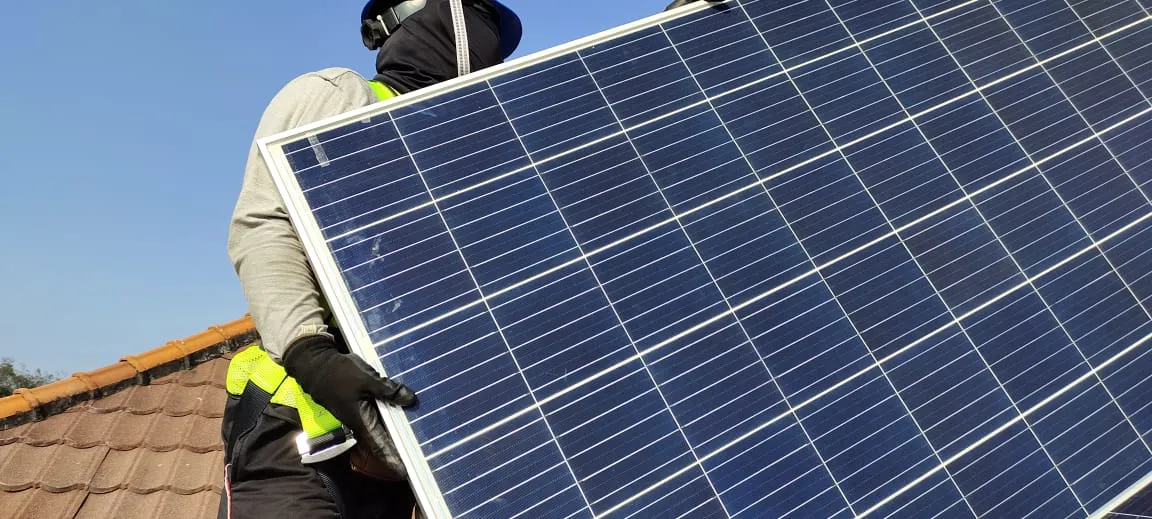
After 25 years, solar panels continue to function even though their efficiency may have decreased. The panel’s performance can still be around 70-80% of its original capacity, depending on quality and maintenance throughout its use. Despite degradation, solar panels can still generate energy, even in unpredictable weather conditions such as cloudy or rainy days. However, the efficiency of sunlight absorption may decline more quickly if the panels are not well-maintained or subjected to extreme weather conditions continuously.
Find solar panel maintenance tips here.
The physical durability of solar panels is quite strong. Materials such as tempered glass used on the surface are capable of withstanding hail, strong winds, and extreme temperature changes. With routine maintenance, such as cleaning from dust and dirt, the panels can remain optimal even as they near the end of their lifespan.
Conclusion
Overall, solar panels remain a reliable energy solution even as they experience a decrease in efficiency of about 0.5-1% per year, reaching 70-80% of their original capacity after 25-30 years. The durability of materials, such as tempered glass, ensures that the panels can withstand extreme weather conditions. With regular maintenance, such as cleaning and inspection, their performance can remain optimal until the end of their lifespan. Additionally, modern technological advancements continue to slow the degradation rate, making solar panels an increasingly economical and sustainable source of eco-friendly energy.